Side Quest Souls: The Players Who Fell Hard for the NPCs Nobody Was Supposed to Notice
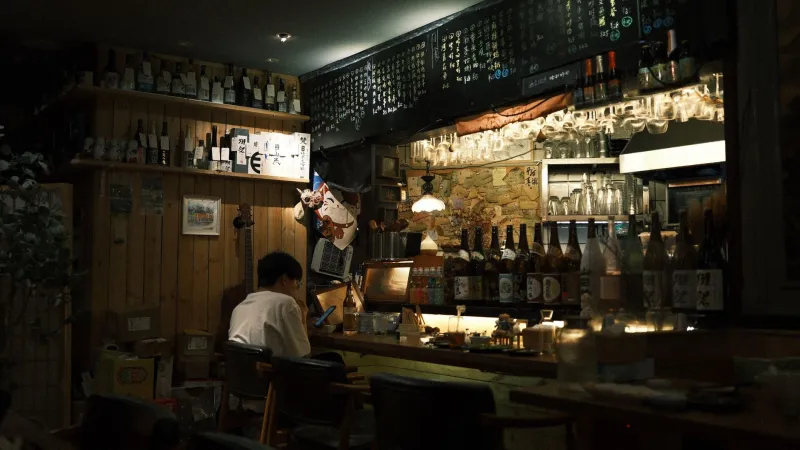
Somewhere in the back corner of a tavern, past the main quest giver and the merchant with the rotating inventory, there's a guy sitting alone at a table. He's got a name — something like "Edric" or "Old Man Tulley" — and exactly two lines of dialogue, both of which loop. The game doesn't need you to talk to him. There's no marker above his head. He doesn't give you anything.
And yet, there are people out there who have written 40,000 words about his life.
This is the world of NPC fandom — one of the quieter, weirder corners of gaming culture that doesn't get nearly enough shine. While mainstream discourse stays locked on main characters and final bosses, a dedicated slice of players has been doing something different: falling completely in love with the characters the developers forgot to finish.
The Ghosts in the Code
Every open-world RPG is full of them. Background NPCs with half-baked dialogue trees, no quest arcs, and names that don't show up anywhere in the credits. They exist to make the world feel populated — to give the illusion that the city breathes, that the village has history. But most players walk right past them.
Not everyone, though.
There's a specific type of player who notices the old woman who stands at the edge of town every night staring at the water. Who catches the merchant who mutters something about a debt he can't repay, then never brings it up again. Who clocks the guard who laughs at his own joke when no one's around. And instead of moving on, that player stops. Thinks. Starts asking questions the game was never designed to answer.
Why is she always at the water? What happened with the debt? Who taught him that joke?
The game won't tell you. So the fans do.
Fan Lore as Emotional Infrastructure
Tumblr, Reddit, AO3, Discord — pick your platform and you'll find them. Threads that go six pages deep theorizing about a character who has maybe 90 seconds of screen time across an entire 80-hour game. Fan art that renders them in more detail than the actual game engine ever did. Fanfic that gives them full backstories, relationships, traumas, redemption arcs.
What's wild is how serious the craft gets. These aren't throwaway posts. People are building coherent internal logic, cross-referencing environmental details, pulling dialogue timestamps, and treating a half-rendered background character like a primary text worth analyzing.
Take any major RPG release in the last decade and you'll find at least one NPC who became a cult figure almost entirely through fan effort. Characters with no voice acting, no dedicated cutscene, sometimes not even a unique character model — elevated to beloved status because a few thousand players decided they deserved more.
The developers often have no idea this is happening. Sometimes they find out years later and it clearly surprises them. The character was filler. A placeholder, almost. And now there's a fandom.
Why the Incomplete Hits Different
Here's the real question worth sitting with: why does this happen? Why are players more emotionally invested in a nameless blacksmith with two dialogue options than in the fully voiced, motion-captured protagonist with a 30-hour arc?
Part of it is the imagination gap. A character that's fully realized — every motivation explained, every backstory spelled out — leaves no room for the player to project. You're a passive receiver. But a character with gaps? That's an invitation. Your brain fills in the blanks automatically, and suddenly the emotional investment is partly yours. You built something there. It's personal in a way the main character can never be.
There's also something about incompleteness that feels more honest. Real people are unfinished. Real people have weird, unexplained behaviors that don't resolve into clean narrative arcs. An NPC who just stands at the water every night without explanation feels, somehow, more real than the hero with the perfectly structured trauma backstory.
The margins of a game world can carry a kind of accidental authenticity that the center — engineered and polished to death — sometimes loses.
The Communities That Showed Up
What's especially interesting is how these micro-fandoms organize. Because unlike mainstream character fandoms, there's no official content to anchor around. No merch drops. No developer interviews elaborating on the lore. No expanded universe novels. Just the original scraps and whatever the community builds on top of them.
That constraint creates something different. The community becomes the canon. Whatever the most compelling, most widely accepted fan theory is — that's the version of the character that lives in collective memory. It's decentralized worldbuilding, and it's happening constantly, quietly, in corners of the internet that don't get algorithmic attention.
Some of these communities have their own internal consistency rules. Debates about which fan interpretations are "valid" based on in-game evidence. Actual arguments about character continuity across fan-written pieces. The level of investment mirrors what you'd see in a fandom built around an actual full character — except the source material is, like, a guy who says "move along" when you try to start a conversation.
What the Devs Left Behind
There's a version of this story that's a critique of game development — and honestly, it kind of is. A lot of these beloved background NPCs exist because games are enormous, deadlines are brutal, and not everything gets finished. What players are falling in love with is often the residue of cut content, shelved storylines, characters who were supposed to be more but got scaled back in the final sprint to ship.
In that sense, the fans aren't just storytellers. They're archaeologists and restorers, working from fragments. They're finishing what the devs couldn't — or didn't get to.
But it's also something more generous than a critique. It's proof that people are hungry to care. That given even the smallest hook — a name, a weird habit, a single line of unexplained dialogue — players will build an entire emotional relationship around it. The incomplete isn't a failure. For the right kind of player, it's a doorway.
The Real Storytellers
Game studios spend millions crafting central narratives. Writers room it out, directors shape it, voice actors bring it to life. And sometimes, the most memorable character in the whole game is the one who slipped through the cracks — the one the studio barely remembers putting in.
That says something. About games, sure, but mostly about players. About the need to find meaning in overlooked places. About how the act of paying attention is its own kind of creation.
The NPC at the back of the tavern doesn't know he's beloved. He doesn't know there are Discord servers debating his motivations or fan artists rendering his face in painstaking detail. He's just running his two-line loop, over and over, in a world that was built to move past him.
But someone noticed. And in this culture, that's enough to make you real.