Lost in Translation No More: The Underground Crews Cracking Open Games the World Never Got to Play
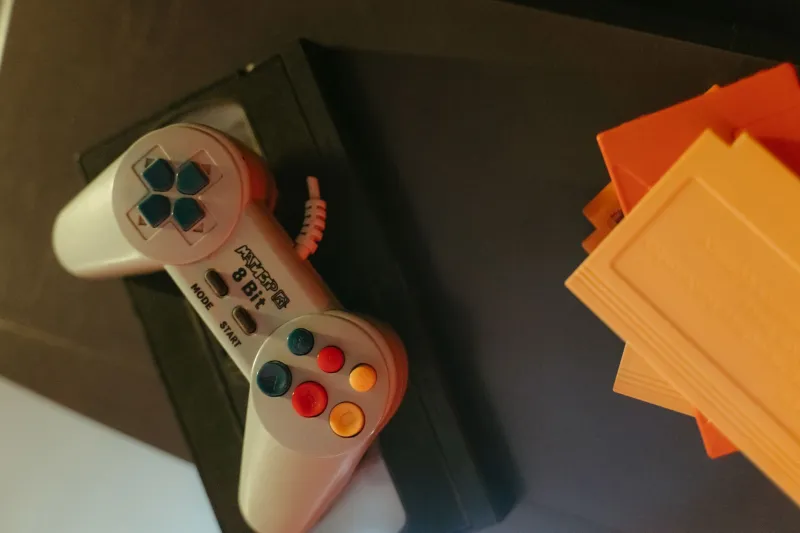
There's a game that came out in Japan in 1998. Gorgeous sprite work, a story that reportedly wrecked people emotionally, a soundtrack that still surfaces in lo-fi YouTube compilations with millions of plays. And for about two decades, if you didn't read Japanese, that was basically it for you. You could look at screenshots. You could watch a playthrough with no subtitles. You could read a fan wiki that somebody half-finished in 2011 and then abandoned.
Then one day, a patch drops. No press release. No announcement trailer. Just a post on a forum that maybe a few thousand people actively check, a download link, and a readme file that says something like "four years in the making — please enjoy."
That's the fan translation scene. And it runs deeper than most people realize.
The Invisible Labor Behind the Patch File
Fan translators don't get paid. They don't get credit in any official capacity. A lot of them don't even use their real names. What they do get is the satisfaction of cracking something open that was locked — and handing the key to everyone else for free.
The actual work is brutal. It starts with ROM hacking, which is the process of getting inside the game's code and figuring out where the text actually lives. Old games especially weren't built with localization in mind, so the text is often compressed, encoded in proprietary formats, or scattered across the file in ways that make zero intuitive sense. You need custom tools, a lot of documentation that may or may not exist, and the patience of someone who genuinely enjoys solving problems that have no instructions.
Once you've extracted the text, you've got to translate it — which sounds like the straightforward part until you realize that a lot of the dialogue is full of wordplay, regional slang, cultural references, and humor that simply doesn't map cleanly into English. A good fan translator isn't just bilingual. They're making editorial decisions about how to carry a joke across two languages and thirty years of cultural distance without killing what made it funny in the first place.
Then there's the reinsertion. Getting your translated text back into the game without breaking everything. Dealing with fixed-width fonts that weren't designed for English character counts. Rewriting the engine's text display logic in some cases. It's coding, writing, and graphic design all tangled together, often split across a small team of people who've never met in person and coordinate entirely through Discord and shared spreadsheets.
The Legal Gray Zone Nobody Talks About Directly
Here's the part where things get complicated. Fan translations typically require distributing a patch that gets applied to a ROM — a digital copy of the original game. The patch itself might be legal. The ROM probably isn't, depending on how you got it. And the translation work itself exists in a weird liminal space where the original IP holder technically has a claim on it even though the translators created the actual text.
Most fan translation groups navigate this by keeping a low profile. They don't monetize anything. They don't host ROMs directly. They release patches and let the community figure out the rest. Big publishers occasionally send cease-and-desist letters, especially when a fan translation gets significant press attention or when the original company decides they want to release an official version after all.
That last part is genuinely bittersweet. There are documented cases where a fan translation blew up enough that a publisher noticed the demand existed, licensed the game, and released an official localization — sometimes even hiring the fan translators themselves. That's a win in terms of the game reaching people. It's also a reminder that these volunteers essentially did market research and proof-of-concept work for free.
When the Patch Drops, the Community Goes Feral
If you've never witnessed the reaction to a long-awaited fan translation release, it's genuinely something. These aren't games with mainstream audiences. The people waiting for them have often been waiting for years, following project update threads, checking in periodically to see if the team went dark or if there's still movement.
When it finally ships, the response is weirdly emotional for something that looks like a software update. People post about playing the game for the first time at 2am and crying. Speedrunners immediately start tearing the newly accessible version apart. Content creators who've been sitting on "when this drops" videos finally get to publish them. Wikis that were stubs for a decade suddenly get a flood of new editors.
The cult following that forms around a newly translated obscure title has this specific energy — it's people who feel like they've been let into something. Like a room that was locked finally opened, and everyone who knew about the room is rushing in together.
The Titles That Changed Everything
Certain fan translations have become legendary in their own right. Mother 3 is probably the most famous — Nintendo never officially brought it to Western markets, and the fan translation released in 2008 is still widely considered one of the best localizations of the game in any language. The team behind it, led by Clyde Mandelin, essentially set the bar for what a fan translation could be.
Beyond the heavy hitters, there's a whole universe of smaller projects covering obscure PC-88 RPGs, Super Famicom tactics games, Korean visual novels, early European computer games that never crossed the Atlantic. These projects might serve audiences of a few thousand people. The translators don't care. The people waiting don't care. The size of the audience was never the point.
Preservation as an Act of Refusal
There's something worth sitting with here. These games would be genuinely gone — functionally inaccessible to most of the world — if not for people who decided that wasn't acceptable. The studios moved on. The hardware became obsolete. The cultural window that might have produced an official localization closed a long time ago.
Fan translators are refusing to let the language barrier be a permanent wall. They're doing it without permission, without compensation, and often without recognition outside of niche forums and Discord servers. What they're building is a kind of unauthorized archive — one that keeps games breathing long after the companies that made them stopped caring.
That's not just a hobby. That's a whole philosophy about who gets to decide what survives and who gets to access it.
And somewhere right now, somebody is three years into a translation project for a game you've never heard of, working through a particularly gnarly piece of dialogue, trying to figure out how to make a 1994 pun land in 2025 English. When they finally ship it, most of the world won't notice. But the people who've been waiting will lose their minds.
That's enough.