Glitch in the Matrix: Why an Entire Generation Is Performing Emptiness and Calling It Real
It started, like most things, as a joke that wasn't entirely a joke.
The NPC meme — the idea that some people move through the world like non-player characters, running scripted responses, no inner life, no deviation from their programmed loop — had been floating around gaming-adjacent internet spaces for years before it broke into the mainstream. For a while it was just a dismissive label, a way to call someone basic or unthinking. Then TikTok got hold of it, and something genuinely strange happened.
People started playing NPCs. On purpose. Enthusiastically. And the audiences who watched them weren't laughing at them — they were tipping them, sending them virtual gifts, shouting commands like they were running a character in an open-world game. The NPC livestream trend became a legitimate subgenre of content. And underneath the obvious weirdness of watching a person repeat "gang gang" on a loop for four hours, something more interesting was happening.
From Slang to Aesthetic
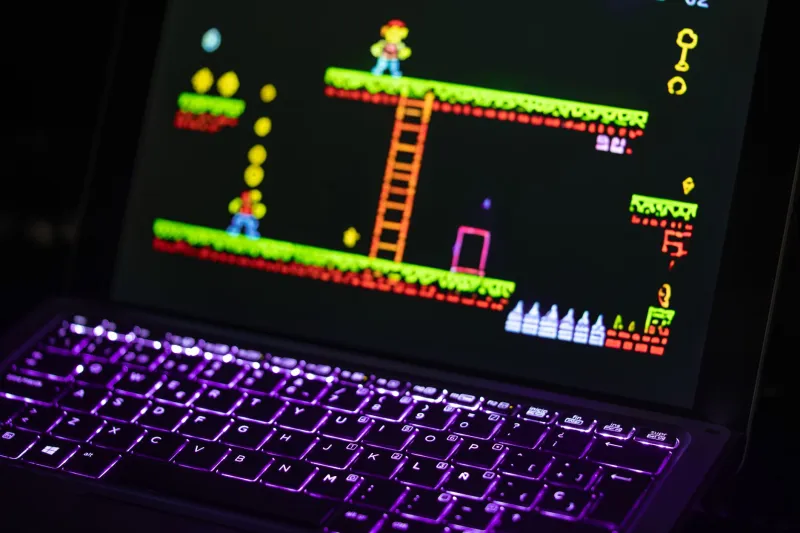
To understand where NPC culture landed, you have to understand where it came from. The term itself is obviously lifted straight from gaming — non-player characters are the ambient population of a game world, the bartenders and guards and townspeople who exist to fill space and deliver quest prompts. They don't grow. They don't change. They respond to player input in predictable, limited ways.
When internet culture started applying that label to people, it was initially a fairly pointed insult aimed at anyone perceived as conformist, unoriginal, or intellectually passive. The political valence got weird fast — it got co-opted by some pretty bad-faith actors for a while — but the core gaming metaphor stuck around and eventually got reclaimed by the exact demographic it was supposed to mock.
Gen Z took the NPC label, stripped it of its original contempt, and rebuilt it as something else entirely: a performance of deliberate deprogramming. If the world wants you to be a main character — to have a personal brand, a narrative arc, a content strategy for your own existence — then opting into NPC mode becomes a form of refusal. A glitch, not a flaw.
The TikTok Pipeline
The NPC livestreaming wave that peaked around 2023 was the most visible expression of this, but it's not the whole picture. Pinkydoll — the Montreal-based creator who became the face of the trend for mainstream audiences — was doing something that looked absurd on the surface but revealed its own internal logic pretty quickly. She was playing a character who responds only to external input, who has no autonomous motivation, who exists purely in reaction. And people paid real money to direct that performance.
The commentary basically wrote itself, and a lot of outlets went for the easy read: look how weird the internet is, look how strange this generation's relationship to identity has become. But that reading misses the subversion built into the whole thing. The NPC performer isn't losing agency — they're performing its absence in a way that forces the audience to confront their own desire to control and direct other people's behavior. The streamer gets paid. The audience thinks they're in charge. Who's the NPC, really?
That layered irony is very much intentional, at least in the communities where NPC aesthetics have taken root most deeply.
Algorithmic Overload and the Case for Going Blank
Here's the context that makes all of this land differently: Gen Z grew up inside recommendation engines. Their media diet has always been curated by systems designed to maximize engagement, which means they've been swimming in parasocial content, influencer performance, and the relentless pressure to have a take on everything since they were old enough to hold a phone.
The main character energy that dominated early 2020s internet culture — the idea that you're the protagonist of your own story, that your life should be cinematic and intentional and shareable — is genuinely exhausting. It requires constant content generation, constant self-narration, constant performance of authenticity. Which is, of course, its own contradiction.
NPC mode is a pressure valve. In spaces where NPC aesthetics circulate — certain corners of TikTok, specific Discord servers, niche Tumblr communities that never fully died — there's a shared understanding that sometimes the most honest thing you can do is admit you're just running a script. That the alternative (performing genuine interiority for an algorithmic audience) might be even less authentic than just going blank.
It's nihilism with a sense of humor about itself. Which is a very specific Gen Z flavor.
The Coded Language of Background Characters
What makes NPC culture interesting to track from the outside is how much of it operates in coded shorthand that requires fluency to decode. References to "the tutorial zone," describing social obligations as "side quests," calling emotionally draining interactions "aggro" — these aren't just gaming metaphors. They're a shared vocabulary for processing real experiences through a frame that creates just enough distance to make them manageable.
That distance is doing a lot of work. When you describe your commute as a "respawn loop" or your job as "NPC dialogue," you're not just being funny — you're signaling a particular relationship to the structures organizing your life. You know the game. You're playing it. You're just not pretending it's more than a game.
There's something almost philosophical in that, even if it doesn't announce itself as philosophy.
What It Actually Means
NPC culture is easy to dismiss as ironic detachment or generational nihilism, and some of it definitely is. But the more you sit with it, the more it reads as a pretty coherent response to a specific set of conditions: information overload, identity commodification, the collapse of any clear boundary between performance and personhood.
When authenticity itself becomes a brand strategy, opting into obvious artificiality might be the only move that feels genuine. When everyone is the main character, nobody is. And when nobody is, the background starts to look like the most honest place to be.
The NPC trend isn't really about games. It never was. It's about what happens when a generation figures out that the game was running on them all along — and decides to lag out on purpose.