Waveform Witnesses: The Audio Forensics Underground Proving Who Made What — and Who Got Erased
Credit disputes in the entertainment industry are as old as the industry itself. But there's something particular about the way game audio gets handled — a combination of contractual opacity, work-for-hire structures, and the sheer volume of sound assets in a modern title — that makes it an especially fertile ground for erasure. Composers who signed NDAs. Voice actors whose sessions got repurposed. Sound designers whose libraries got folded into a studio's internal archive without attribution.
A small but technically sophisticated community has decided that if studios won't surface those names, the waveforms will.
Sound Leaves a Mark
Every audio professional has a fingerprint. Not in the melodramatic sense — in the literal, technical sense. Recording environments leave acoustic signatures in raw files. Specific microphone chains introduce frequency coloration. Reverb choices, compression habits, EQ preferences — when someone works consistently across years and projects, those tendencies accumulate into a recognizable pattern.
More concretely: audio files, before they're mastered and compressed for a shipped game build, often contain metadata artifacts, room tone characteristics, and spectral patterns that survive the production pipeline. Not always. Not reliably. But often enough that a careful analyst can start making probabilistic identifications.
This is the core premise of what the community calls acoustic provenance work — using audio forensics tools to trace the origin of a sound, a composition, or a voice performance back to a specific individual or recording context.
"It's not magic," explains a researcher who operates under the name spectra_null and contributes to a private community called The Listening Room. "It's pattern recognition applied to things most people aren't listening for. Once you know what a particular studio's recording chain sounds like, or what a specific composer's reverb signature looks like in a spectrogram, you start seeing it everywhere."
The Toolkit
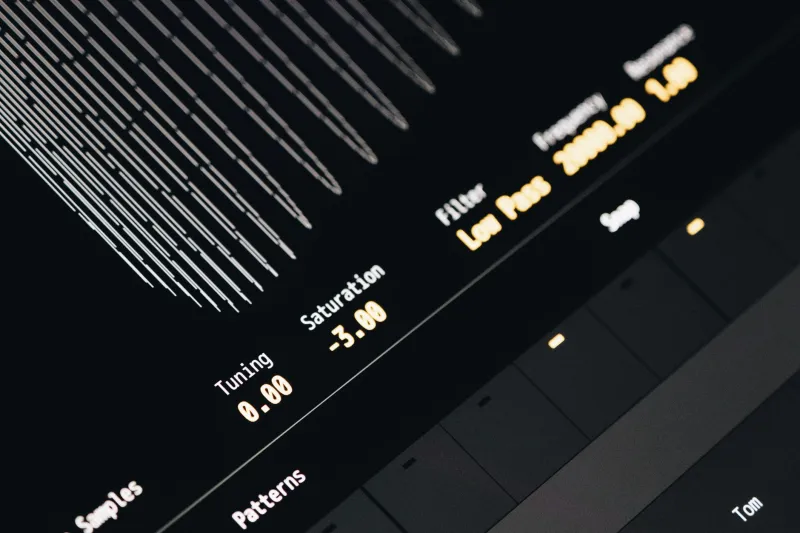
The community's workflow draws on a combination of professional audio tools and open-source alternatives. Spectral analysis software — Adobe Audition, iZotope RX, and the free Sonic Visualiser — forms the foundation. Researchers extract audio assets from game builds (a process that varies in complexity depending on the engine and file format), run them through spectral analysis, and begin comparing against reference libraries they've built from known, credited work.
Voice identification is a separate discipline within the community. It borrows from forensic phonetics — the academic field used in legal contexts to identify speakers from recordings — and applies those methods to the specific challenge of matching uncredited game performances to known actors. Formant analysis, prosodic patterns, the particular way a voice handles consonant clusters: these are measurable characteristics that persist across roles and sessions.
Several members of The Listening Room have backgrounds in audio engineering or music production, which gives the community's methodology more grounding than you might expect from a fan-driven operation. Others came from gaming communities and taught themselves the technical side out of pure stubbornness. The mix works.
What the Files Are Saying
The findings that have circulated within the community — carefully, in most cases, with heavy caveats about confidence levels — point toward a few recurring patterns in how game audio labor gets handled.
One is the reuse problem. Sound design libraries built by freelancers under work-for-hire contracts get absorbed into studio asset archives and redeployed across multiple titles over years, sometimes decades. The original creator gets paid once, credited once (or not at all), and then watches their work echo through release after release without acknowledgment. Acoustic provenance work has, in several cases, allowed researchers to trace a specific sound design element across four or five different titles from the same publisher — work that originated with a single designer who left the studio years ago.
Another pattern involves voice performance. The industry's use of non-union session work, especially for smaller roles and regional variants, creates situations where actors record under agreements that limit their ability to claim credit publicly. The community has matched several voice performances in shipped titles to actors who, when quietly contacted, confirmed the work but couldn't discuss it contractually. The confirmation stays off the record. The match gets logged in the database.
"We're not publishing accusations," spectra_null is careful to note. "We're building a record. There's a difference. The record is for when it matters — when someone's trying to prove they did something, or when a pattern becomes too consistent to ignore."
The Stakes
This isn't purely academic. Residual structures, portfolio rights, and professional reputation all hinge on being able to demonstrate that you made a thing. For session musicians and voice actors especially, credit is currency — it's how you get the next job, how you qualify for union benefits in certain contexts, how you establish the body of work that defines a career.
When that credit disappears, either through contractual stripping or simple omission, the damage is real. The audio forensics community is operating, at least in part, as an informal documentation layer for an industry that doesn't adequately document itself.
There are limits to what acoustic fingerprinting can prove in any formal sense. Courts and credit arbitration panels aren't going to accept a spectrogram comparison as conclusive evidence without supporting documentation. The community knows this. What they're building is more like a map — a starting point for conversations that would otherwise have no foundation at all.
Listening Differently
What makes this community genuinely unusual is the quality of attention it demands. These are people who listen to game audio the way literary scholars read texts — not for surface meaning, but for the structural patterns underneath. They hear a reverb tail and think about the room it was recorded in. They hear a voice and start measuring its formants. They hear a musical phrase and ask which hand wrote it.
That kind of listening isn't something most players — or most studios — are doing. But the files are there, sitting in the build, full of information nobody bothered to redact.
The waveforms know who was in the room. The community is just learning how to ask them.