Sound Strippers: The Audio Nerds Peeling Back Game Soundtracks to Find What Studios Never Wanted You to Hear
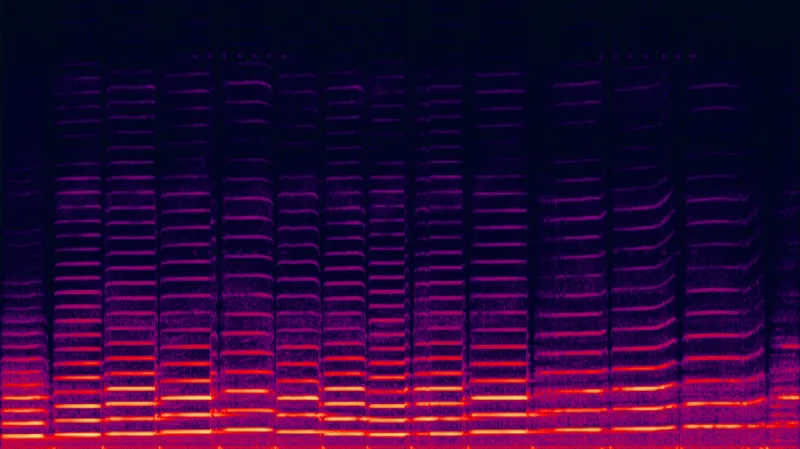
Photo: Unknown, CC BY-SA 3.0, via Wikimedia Commons
Most players hear a game soundtrack and feel something — tension, nostalgia, hype. A very specific type of person hears a game soundtrack and immediately wants to run it through a spectrogram.
These are the sound strippers. Not a formal group, not a Discord with a fancy logo, just a loose network of audio obsessives who've turned game music into an archaeological dig site. Their tools are open-source frequency analyzers, custom DAW setups, and the kind of patience that makes regular people uncomfortable. Their reward? Finding the stuff studios buried so deep they assumed nobody would ever go looking.
What Actually Gets Buried in a Game's Audio
Here's the thing most people don't realize: audio files in games are rarely clean. The pipeline from a developer's recording session to the final compressed file that ships on a disc or download is messy. Layers get stacked. Temp tracks get left in. Dev commentary recorded during production sometimes never gets stripped out properly before a build goes gold.
And that's before you even get into the intentional stuff.
Some studios have a history of hiding things in audio on purpose — spectral images embedded in frequency ranges humans can't consciously hear, reversed dialogue tucked under ambient tracks, placeholder voice lines that shipped because someone forgot to swap them out. The community calls these "ghost layers," and finding one is basically the audio equivalent of cracking open a wall and finding a secret room.
One well-documented example that circulated through these circles involved an open-world RPG where a spectrogram of a specific ambient track in a late-game dungeon revealed what appeared to be a developer's voice note — partial sentence, clearly recorded in a studio, about a mechanic that didn't make it into the final game. The community pieced together enough context to identify which system got cut and roughly when in development the decision was made. No official statement ever confirmed it. They didn't need one.
The Tools They're Actually Using
If you're imagining some Hollywood-style audio lab, dial it back. Most of this work happens on consumer hardware with software that's either free or costs less than a AAA game.
Sonic Visualiser is a recurring name in these circles — open-source, powerful, and capable of rendering audio in ways that make hidden content visible rather than just audible. Audacity still gets used for basic layer separation, though more serious practitioners have migrated to more robust DAWs. Some folks have built custom scripts that automate the process of scanning audio files for anomalies across entire game directories, flagging anything that doesn't match expected frequency patterns for manual review.
The compression angle is where it gets genuinely technical. Modern games use audio codecs like Ogg Vorbis, OPUS, or proprietary middleware formats like FMOD and Wwise. Each of these compresses audio in specific ways, and understanding the artifacts that compression creates versus the artifacts that indicate something was actually embedded underneath — that's the skill that separates the real ones from the people just messing around.
A few members of this community have backgrounds in audio engineering or music production. Most don't. They learned by doing, sharing findings in threads, getting corrected by people who knew more, and building up a collective knowledge base that now lives scattered across forum posts, Discord channels, and personal wikis that aren't exactly easy to find.
What the Finds Actually Tell Us
Beyond the novelty of finding hidden stuff, what makes this community genuinely valuable is the interpretive layer. These aren't just people screenshotting spectrograms and posting them for clout. The serious practitioners are using what they find to reconstruct developer intent — to understand decisions that got made in the dark and never explained publicly.
Cut dialogue is particularly revealing. When a voice actor records lines that don't make it into the final game but the audio files stick around in the package, those lines tell you something. Maybe a character had a different arc. Maybe a plot point got reversed late in development. Maybe a relationship between two characters was written completely differently before someone upstairs decided to soften it.
One community member — who goes by a handle that translates roughly to "dead signal" — has been building a structured database of found audio anomalies across roughly forty games spanning two decades. The patterns are striking. Games that shipped feeling narratively incomplete almost always have the audio receipts sitting right there in the files, waiting. The missing scenes didn't disappear. They just got compressed under something else.
The Studios Know, and They Don't Know What to Do About It
Here's where it gets interesting from a power dynamics perspective. Some studios have clearly become aware that this community exists and is active. Audio file structures in certain recent releases have gotten noticeably more deliberate — cleaner separation, more thorough stripping of temp content before shipping, occasionally what looks like intentional misdirection where something looks like a buried layer but turns out to be noise.
But other studios have leaned into it. Easter egg audio has become a legitimate design tool, with some developers clearly planting things specifically because they know someone will find it. The community has complicated feelings about this. There's a real difference between discovering something that was hidden because it was forgotten versus something that was hidden because a marketing team decided it would generate buzz. The former feels like archaeology. The latter feels like being handed a treasure map.
The underground doesn't love being used as a promotional mechanism. But they'll take the finds either way.
Why This Matters Beyond the Finds
There's a version of this story where it's just a quirky hobby — people running audio files through software and occasionally finding something cool. That version is underselling it.
What this community is actually doing is creating a record. Games are commercial products, and commercial products have a way of getting revised, delisted, re-released with changes, or just quietly altered in ways that nobody announces. The audio forensicists are capturing states of games that may not exist anymore in any official form. They're documenting creative decisions that studios would rather stay invisible. They're building an institutional memory for an industry that has historically been terrible at preserving its own history.
The studios buried this stuff because they didn't think anyone would dig. The sound strippers are proving that assumption wrong, one frequency layer at a time.