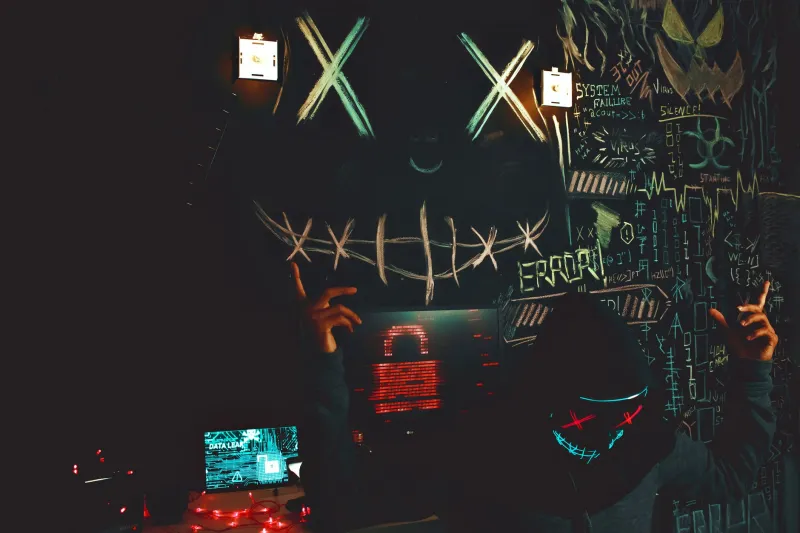
Feed Hackers: The Secret Networks Cracking Platform Algorithms Before the Platforms Know They're Broken

Photo by Photo by Abu Saeid on Unsplash on Unsplash
Most content creators are throwing darts in the dark. Post at the right time, use the trending sound, pray to whatever gods govern the For You Page. It's guesswork dressed up as strategy, and for the vast majority of people grinding on TikTok or YouTube, it stays that way forever.
But there's another tier. A quieter one. And they're not guessing.
The Underground Lab
There are Discord servers — private, invite-only, the kind you don't find through a Google search — where creators treat platform algorithms the way hackers treat software. They probe for weaknesses. They run controlled experiments. They share findings in channels labeled like patch notes. And when something works, they move fast before the window closes.
The methodology isn't random. These communities, some numbering only a few hundred members, operate with a level of rigor that would embarrass most marketing agencies. Creators post test videos with isolated variables — same audio, different caption structure. Same caption, different first-frame visual. They document retention curves, share timestamp data, and build shared databases of what the platform rewarded in the last 72 hours versus what it buried.
"It's basically A/B testing at scale, except we're all running tests simultaneously and pooling the results," said one member of a private creator collective who asked to be identified only by their Discord handle. "A single creator testing alone takes months to see a pattern. Two hundred creators testing together? You see it in a week."
This is the underground edge — collective intelligence applied to systems that were designed to be opaque.
Leaked Data and Pattern Recognition
Some of what these communities work with is observational. Watch enough videos, track enough metrics, and patterns emerge. But some of it is murkier. Screenshots of internal dashboards circulate in these spaces. Former platform employees surface occasionally, not naming names, but confirming or denying theories. Leaked slide decks from creator partnership programs get dissected line by line.
None of it is officially sanctioned. All of it gets used.
One recurring thread type in these servers is what members call "patch detection" — identifying when a platform has quietly adjusted how it weights certain signals. YouTube's algorithm, for instance, doesn't announce when it shifts emphasis from click-through rate to watch time percentage, or when it starts rewarding comment velocity over raw view count. But the underground notices. A wave of videos that were performing suddenly flatlines. A format that was dead starts popping. Someone posts the anomaly, others confirm it from their own data, and within 48 hours there's a working theory about what changed.
"The platforms say their algorithm changes are designed to improve user experience," one creator noted in a thread that was later screenshotted and shared widely. "What they mean is they found out we were gaming the old version."
The Exploit Window
Here's where it gets interesting: these communities don't just crack the algorithm. They coordinate.
When a viable exploit is confirmed — a specific video structure, a metadata combination, a posting cadence that's feeding the recommendation engine in a way the platform didn't intend — the information spreads through the network fast. Creators who are in the know execute simultaneously, flooding the zone before the platform's systems can recalibrate. It's not unlike a coordinated market move, and the creators who get there first see outsized results.
But the window is always closing. Platforms employ their own data scientists, and unusual traffic patterns get flagged. An exploit that works brilliantly for two weeks might be neutralized quietly in the next update, with no announcement, no explanation. Accounts that leaned too hard into a specific tactic sometimes find themselves shadowlimited — not banned, just quietly throttled.
The underground's response to this is adaptation. The best servers don't just share what's working now. They teach the methodology — how to read your own analytics like a diagnostic tool, how to isolate variables in your testing, how to identify when a platform shift has occurred. The goal isn't to hand out a cheat code. It's to build the kind of instinct that survives the next patch.
When the Mainstream Catches Up
Inevitably, some of what these communities discover leaks into the broader creator economy. A YouTube growth podcast starts talking about a technique that the underground figured out three months ago. A marketing newsletter publishes a "new strategy" that looks suspiciously like a thread that circulated in a private server back in Q1. The underground creators watch it happen with a mix of amusement and irritation.
By the time something is being discussed openly on mainstream creator platforms, it's usually already been patched or diluted. The value was in being early. The mainstream gets the echo.
This dynamic — underground discovers, mainstream inherits, platform neutralizes — has become a reliable cycle. And it keeps the underground motivated. There's no finish line here. The algorithm changes, the community adapts, and the whole process starts over.
The Ethics Nobody Talks About
It's worth asking what this all means for the content itself. When creators are optimizing for algorithmic signals rather than audience connection, something shifts. Videos get engineered to hit retention benchmarks at specific timestamps. Thumbnails are designed to trigger click responses rather than communicate content. The craft bends toward the machine.
Some in these communities are aware of the tension. There are threads, quieter ones, where creators ask whether chasing the algorithm is making their content worse — whether the optimization is hollowing something out. The answers are mixed. Some people came to these servers to grow a business. Others came because they genuinely love what they make and want it to reach people. The algorithm doesn't care about the distinction.
What the underground has figured out is that the platforms aren't neutral surfaces. They're systems with preferences, and those preferences can be decoded. Whether you use that knowledge to make something meaningful reach the right people, or just to game your way to numbers — that part's still on you.
The feed doesn't judge. It just responds.