Clock Chasers: Inside the Obsessive, Unhinged World of Competitive Speedrunning
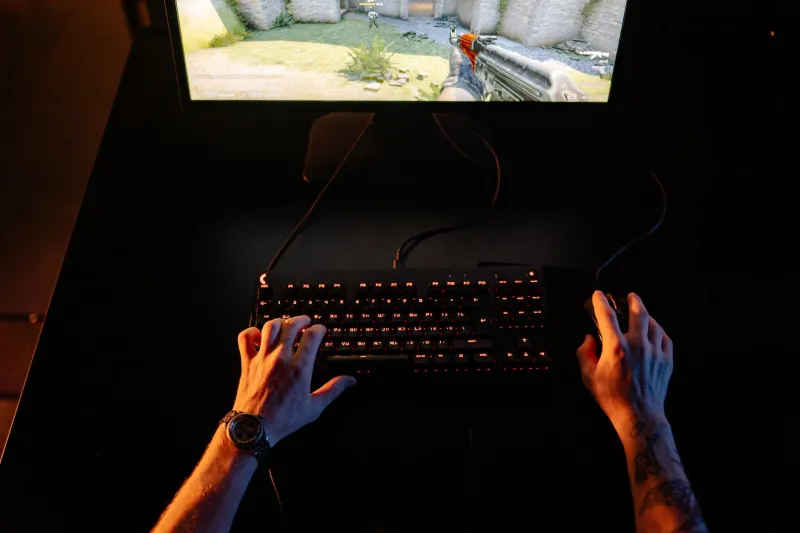
Somewhere in the midwest right now, someone is resetting a Super Nintendo for the four hundredth time tonight. They're not tilting. They're not frustrated in any way that would make sense to a normal person. They're optimizing. They've been awake for nineteen hours and they're two seconds off a world record that has stood for eight months, and those two seconds are the only thing in the universe that matters to them right now.
This is speedrunning. And it is, depending on who you ask, either the purest form of gaming competition that exists — or a beautiful thing that's slowly being ruined by its own success.
What Speedrunning Actually Is (And Isn't)
For the uninitiated: speedrunning is exactly what it sounds like. You play a game. You try to finish it as fast as possible. You submit your time. The community verifies it. If it's the fastest anyone has ever done it, you hold the world record until someone beats you.
That's the simple version. The reality is considerably weirder and more complicated.
Speedruns are broken into categories that can get extremely specific. "Any%" means you finish the game by any means necessary — glitches, skips, exploits, all of it fair game. "100%" means you collect everything, complete every objective. "Glitchless" means you play it clean, no exploits. Some games have dozens of categories. Some categories have active leaderboards with hundreds of competitors. Some have three people, and those three people know each other by username and have been trading the record back and forth for years like a very niche, very intense blood feud.
The community infrastructure lives primarily on Speedrun.com, which functions as the official leaderboard repository for thousands of games, and on Twitch, where runners broadcast their attempts live. Discord servers handle the actual community life — strategy discussion, route planning, drama, and the kind of deeply specific in-jokes that only make sense if you've spent a hundred hours watching someone play the same thirty-minute game.
Games Done Quick and the Mainstreaming Problem
If you've heard of speedrunning at all, you've probably heard of Games Done Quick. GDQ is a biannual charity marathon — Awesome Games Done Quick in January, Summer Games Done Quick in, obviously, summer — where runners perform live speedruns for charity, typically raising millions for organizations like Doctors Without Borders and the Prevent Cancer Foundation. It's become a genuine institution. Past events have raised over three million dollars in a single week. The Twitch viewership numbers rival major sporting events.
GDQ is, by any reasonable measure, a massive success story. It took something that happened in basements and anonymous forums and put it in front of hundreds of thousands of people who had never considered that finishing a video game as fast as possible could be compelling television. And it is. Watching a skilled runner tear through a game you love in a fraction of the time it took you to finish it — while explaining exactly how and why every single decision they're making works — is legitimately captivating.
But here's where the community gets complicated.
For a certain contingent of speedrunning's old guard — the people who were doing this before there were Twitch donations and charity incentives and hype trains — GDQ represents something uncomfortable. The exposure is great. The money going to charity is great. But the culture that comes with mainstream attention? That's a different conversation.
GDQ runs are curated for entertainment value. Runners are selected partly for their ability to perform, to commentate, to keep an audience engaged. The raw, obsessive, slightly unhinged quality of what speedrunning actually looks like at 3 AM on a Tuesday — the resets, the silence, the single-minded focus on a number — doesn't really translate to a charity marathon format. And some runners feel that the version of speedrunning that's become famous is a polished, sanitized version of the real thing.
The Underground Circuits
Parallel to the GDQ pipeline, there's a whole ecosystem of speedrunning that operates in near-total obscurity and seems to prefer it that way.
These are the runners grinding obscure categories of games that will never appear in a charity marathon because nobody outside of forty people has ever heard of them. Runners chasing records in games that were critically panned, games that never got a US release, games that exist on hardware so niche that finding a working copy requires an eBay deep dive and a small prayer.
There's a particular kind of dedication that only shows up at this level. These runners aren't doing it for an audience. They're doing it because the game has an interesting routing problem, or because the category has a technical challenge they haven't solved yet, or simply because they looked at a leaderboard with a record that seemed beatable and couldn't let it go.
The community around these obscure categories is often tiny, intensely close-knit, and surprisingly competitive. When your entire leaderboard has six entries, every improvement is significant. Every new runner is a threat and a welcome addition simultaneously. The records get traded with the kind of frequency that suggests everyone involved is spending a genuinely alarming number of hours on this.
The Rivalry Architecture
One thing that doesn't get talked about enough in mainstream coverage of speedrunning is how genuinely dramatic the interpersonal dynamics can get.
Record chasing is inherently adversarial, even when everyone involved is friendly. When you've held a world record for six months and someone beats it by three seconds, there's a specific feeling that motivates you to spend the next two weeks finding those three seconds back. The back-and-forth record trades that happen at the top of competitive categories generate a kind of slow-burn rivalry narrative that plays out over months or years.
Some of the most compelling storylines in speedrunning have nothing to do with the games themselves — they're about the people. The runner who came out of nowhere to beat a record that had stood for years. The veteran who came back after stepping away to reclaim a category they'd originally pioneered. The community split over whether a particular technique should be legal in a given category.
This is genuine sports drama. It just happens to involve a person alone at a desk, talking to a chat window, playing a game from 1996.
The Purist Question
The tension between mainstream recognition and underground authenticity isn't unique to speedrunning — it shows up in every subculture that gets discovered. But speedrunning is an interesting case because the community is unusually self-aware about it.
There are runners who actively want the growth, who see GDQ exposure as legitimizing, who think speedrunning deserves to be recognized as the competitive pursuit it genuinely is. And there are runners who feel, with some justification, that what made speedrunning special was exactly its weirdness — the fact that it was a thing people did because they were obsessed, not because there was an audience for it.
Both positions are defensible. And the community will probably argue about it forever, which is itself very on-brand.
What's not in dispute is that the people at the core of this — the ones resetting games at 3 AM, chasing two seconds on a leaderboard nobody outside their Discord server will ever look at — are operating on a level of focused dedication that most people will never apply to anything in their lives.
That's worth noticing. That's worth respecting.
Even if, from the outside, it looks completely insane.